The core insight: find people mid-pain, not people who might eventually have the problem
The single most useful piece of advice across hundreds of responses: don't search for people who match your target demographic. Search for people who are actively experiencing the problem your product solves, right now.
The distinction matters. A founder who "thinks about fundraising eventually" won't respond to outreach. A founder who posted on Reddit three hours ago asking "where can I find a list of seed investors in fintech" is mid-pain and will respond enthusiastically. One developer in the thread framed it precisely: "There's a massive difference between 'founder who might fundraise someday' and 'founder who posted about investor outreach struggles 3 hours ago.' The second person will respond to your DM at 10x the rate because they're mid-pain."
Every channel strategy below works the same way: the goal isn't presence in the right community, it's showing up at the right moment — when someone is actively dealing with the problem you solve.
Channel 1: Reddit (niche subreddits, problem-first search)
Reddit is the highest-signal zero-budget channel for finding first users — but only if you search correctly. The mistake is searching for keywords related to your product. The right approach is searching for the language people use when they're mid-problem.
If you've built a habit tracker, don't search "habit tracker." Search for: "can't stick to my habits," "tried every habit app," "habit streak broken," "how do people actually build habits." These are the threads where people are expressing the pain your product solves. Engage with the thread genuinely — answer the question — then mention you built something that addresses exactly this if it comes up naturally.
The Reddit outreach sequence that works:
- Find threads where people describe your exact problem (use
site:reddit.com/r/[subreddit] "[problem phrase]"in Google for better search than Reddit's own) - Comment with a helpful answer — not a product pitch
- DM the thread author: "I answered in the thread but also built something specifically for this — would you want to try it free in exchange for 15 minutes of honest feedback?"
This sequence works because you've already demonstrated value (the helpful comment), and the DM is specific and low-ask. Response rates are meaningfully higher than cold product pitches.
Channel 2: X/Twitter DMs
Multiple developers in the thread reported X DMs working "surprisingly well" for initial user acquisition. The mechanics are similar to Reddit: find people posting about the problem, engage publicly, follow up with a direct message.
X has one advantage over Reddit for this: posts are real-time and searchable. A search for your core problem phrase sorted by "Latest" surfaces people who posted in the last few hours. At that recency, they're almost certainly still thinking about the problem and will be responsive to a helpful DM. One developer reported getting 10 early users this way with a three-line pitch sent to people who'd posted about the problem.
One practical note from the thread: X feels heavily botted in 2025, but the DM channel specifically has higher response rates than public posts because it's still primarily person-to-person. Reply rates on targeted DMs to people actively venting about a problem are significantly better than generic cold outreach.
Channel 3: Discord and Slack communities
"I just went into niche Discord servers and subreddits related to the problem I was solving and literally DM'd people who were complaining about it. It is slow and feels like a grind but the feedback you get is way more valuable than just running random ads."
Discord and Slack groups for specific niches are underused for early user acquisition because most developers think of them as broadcast channels. They work much better as conversation channels. Find the 2–3 most active Discord servers for your target audience (search "[your niche] discord" — most active communities have public invite links), spend a week participating genuinely, then reach out to members who express the problem your product solves.
The friction of getting into these communities is actually a feature: it means your competitors haven't saturated them with cold pitches yet. You show up as a community member, not as an advertiser.
Channel 4: Hacker News Show HN
A Show HN post — "Show HN: I built [product] to solve [specific problem]" — can drive hundreds of installs in 24 hours if it gets traction. The key requirements: the problem must be immediately legible to a technical audience, the solution must be genuinely interesting (not a clone), and you should be prepared to respond to every comment on launch day.
HN's feedback is harsh but high-signal. One developer in the thread described getting a top comment of "I just installed and deleted the app" — painful, but it pointed directly to the flaw that needed fixing. HN users will tell you exactly what's wrong, which is exactly what you need at the zero-user stage.
HN works best for developer tools, productivity apps, and anything with an interesting technical backstory. It doesn't work well for consumer apps with no developer-adjacent angle.
Channel 5: Product Hunt
Product Hunt drives meaningful early traffic, but only if you've prepared. A cold launch with no existing community support lands on page 2 within hours. A coordinated launch where your building-in-public audience upvotes early can chart in the top 5 for the day and drive hundreds of installs.
The minimum viable PH preparation: announce your upcoming launch to your X and email list a few days before, post on launch day as early as possible (12:01am PST), and respond to every comment. The detailed PH launch playbook is covered in our guide on the launch build-up strategy.
Channel 6: Personal network (for testing, not validation)
Friends and family are your fastest path to feedback — but not to validation. People who know you will use your product to be supportive and tell you what you want to hear. That's useful for finding bugs, testing onboarding flows, and making sure the basics work, but it's not useful for understanding whether strangers will find value in the product.
Use your personal network to get the app functional and the onboarding coherent. Use the channels above to find people with the actual problem and measure whether they find genuine value.
One caveat: "friends of friends" in your ICP is a meaningfully different category. A second-degree connection who has the problem you're solving will give you honest feedback and is a real early user — not just a supportive friend doing you a favor.
What to do with the users you find
Getting first users is half the problem. The consistent lesson from every developer in the thread: users almost never give useful feedback unprompted. They'll use the product silently, get confused, stop using it, and never tell you why.
The approaches that actually produce feedback:
Watch them use it, don't ask what they think
"Can I watch you use it for 20 minutes while you try to [task]?" produces more signal than any feedback form. You're observing where they hesitate, where they re-read instructions, where they tab away. One developer described asking users to screen share and "talk out loud while you do it" — the verbal commentary during use is more useful than any post-use survey.
Ask about the moment before they stop, not their opinion
The questions that get useful answers:
- "What almost stopped you from signing up?"
- "What confused you when you first opened it?"
- "What task were you trying to complete when you got stuck?"
- "What would make you come back tomorrow?"
Generic questions ("do you have any feedback?") get silence. Specific questions tied to real moments get honest answers.
The churned users tell you more than the active ones
Multiple developers made the same observation: the users who stopped using your product know exactly why they stopped — they just won't say unless you ask directly. Email them with a single question: "We noticed you haven't been back — could you tell me one thing that stopped you from returning?" Even a 10–20% response rate on churned users produces high-value signal about what's broken in the core experience.
When to prioritize the listing over finding more users
If you're driving users to an App Store listing that's not converting, you're losing most of the people you find before they even install. A vague first screenshot, a subtitle that doesn't describe the problem you solve, or screenshots that show a beautiful UI with no captions — these are all conversion leaks that mean your outreach work doesn't compound.
Before scaling any acquisition channel, make sure your listing can convert the traffic you send to it. The first screenshot is the highest-leverage element: a clear benefit caption in the top third of the image, high contrast, large type. ezscreenshots makes it straightforward to build this — drop in your Simulator screenshot, add the caption, export at the correct dimensions for your device targets. A listing that converts at 25% means every user you find through outreach has a 1-in-4 chance of becoming a download. A listing converting at 10% cuts that in half.
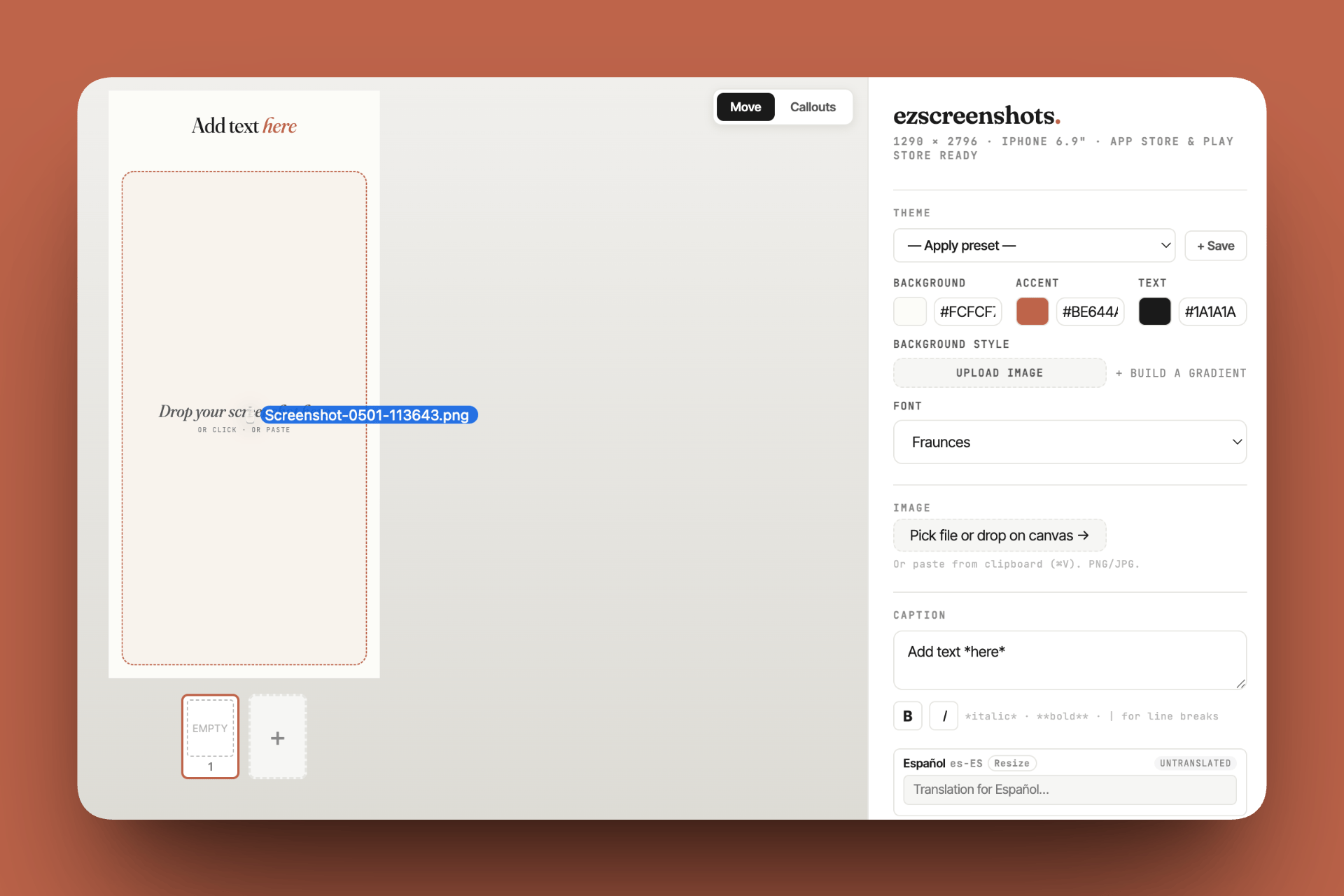
Make sure your listing converts the users you find
Outreach and community work drive users to your App Store page. A weak first screenshot leaks that traffic before they download. Drop in your Simulator screenshot, add a specific benefit caption, export at the right dimensions. Free, no account needed.
Try ezscreenshots →Summary
- Find people mid-pain, not people who vaguely match your target demographic — someone posting about the problem right now is 10x more responsive than a cold demographic match
- Reddit: search for problem language, not product category; engage helpfully in threads before DMing
- X/Twitter DMs: search "Latest" for real-time problem posts; targeted DMs to people who just vented convert well
- Discord/Slack: join niche communities, participate genuinely, DM members expressing the problem
- Hacker News Show HN: best for developer-adjacent tools; brutal but high-signal feedback
- Product Hunt: needs coordinated preparation; works well when you have an existing small audience
- Personal network: useful for testing bugs and onboarding, not for product validation
- Getting feedback: watch them use it (don't ask their opinion); ask about specific moments of confusion; email churned users with one direct question
- Fix your listing first — a 10% conversion rate cuts your outreach ROI in half compared to 25%