The problem every indie dev hits
An iOS developer posted on r/iOSProgramming: after running out of money post-launch, he started displaying a printed QR code to his Uber passengers — marketing his app to a captive audience of strangers, one ride at a time. The comments flooded in with encouragement, naming suggestions, and a universal recognition of the situation: you built the thing, now what?
The Uber tactic itself isn't the lesson. What matters is the underlying reality: App Store discovery alone won't carry an indie app, and paid ads require both budget and expertise that most solo developers don't have. The developers who do break through on zero budget use a specific set of channels — and they use them intentionally.
Why organic discovery isn't enough on its own
The App Store search algorithm rewards apps that already have downloads and reviews. A new app from an unknown developer, regardless of quality, starts with no ranking signal — which means low organic visibility, which means few downloads, which means the ranking stays low. It's a cold-start problem that pure ASO alone can't solve.
The channels below break the cold start by driving external traffic — people who come to your App Store listing from outside the store. That external traffic, even in small volumes, creates the download velocity that feeds the algorithm. It also gives you real users whose reviews and retention signals then build organic ranking over time. See the guide on the build-up strategy for launch day for how this compounds.
Channel 1: Reddit — the highest-ROI zero-budget channel
Reddit is the closest thing indie developers have to a free distribution channel with a built-in, engaged audience. The mechanics: find the 3–5 subreddits where your target user already hangs out, spend several weeks being a useful member (answering questions, sharing knowledge, genuinely participating), then post about your app as a community member rather than a promoter.
The posts that work follow a formula: lead with the problem you solved, not the product you made. "I kept losing track of X, so I built Y" outperforms "Check out my new app Y" because the first is a story that belongs in a community, the second is an ad. Include a short screen recording if you can. End with a genuine question that invites responses.
Subreddits worth knowing for app launches: r/iOSProgramming, r/iosdev, r/androiddev, r/indiehackers, r/SideProject — and the specific community subreddit for your app's problem domain (if it's a fitness app, r/fitness; if it's a productivity app, r/productivity, etc.). The problem-domain subreddits are where your actual users are.
Channel 2: Building in public on X (Twitter)
Building in public means sharing your development process — screenshots of features, design decisions, problems you're solving, honest numbers — before and after launch. The audience you build watching you build is your warmest possible launch audience.
The mechanics: post short updates with visuals 3–5 times per week during development. Screenshot of the new UI, a before/after of a design change, the first time a feature worked. Don't pitch — share. The people who follow along become invested in seeing you succeed and are far more likely to download and review on launch day.
Building in public has a compounding effect: each post is indexed and discoverable, past posts build social proof, and the habit of shipping and sharing creates accountability that actually improves the product. Developers like Marc Lou, Pieter Levels, and others have documented how building in public generated their initial user bases without any ad spend.
Channel 3: TikTok micro-influencers
This is the highest-variance but potentially highest-impact zero-budget channel in 2026. The pattern: find creators in your app's niche with 5k–50k followers (not mega-influencers), reach out with a free Pro/premium account in exchange for an honest mention. The reach-per-dollar is significantly better than any paid ad channel at this scale.
Apps like Umax and CalAI built to $500k–$1M monthly revenue using primarily TikTok creator seeding. The mechanics aren't complicated: the app fits naturally into existing content (fitness apps in fitness content, habit apps in productivity content), and creators with small but engaged audiences have higher trust and conversion rates than large accounts.
Outreach template that works: "Hi [name], I use your content for [specific thing]. I built an app that [specific value to their audience]. I'd love to give you free access in exchange for an honest mention if you find it useful. No script required." The "no script required" line matters — it signals authenticity and gets a higher response rate than obviously templated pitches.
Channel 4: Product Hunt
Product Hunt is a real launch channel with a real audience of early adopters — but only if you prepare. A cold submission with no existing community gets buried on the second page. A submission where you've already built support from your building-in-public audience and TestFlight users can chart in the top 5 for the day, which drives hundreds of installs.
Preparation: post as a "maker" before your official launch (teaser posts are allowed), build relationships in the PH community by commenting on others' launches, and coordinate your launch day post with your existing audience. Submit on a Tuesday–Thursday to avoid competing with high-profile launches that typically cluster on Mondays. The guide on the launch build-up strategy covers PH coordination in the broader launch timeline.
Channel 5: Launch directories
There are dozens of curated directories for new apps and tools — many free to submit, all providing permanent backlinks and some organic discovery traffic. The value per submission is low individually but cumulative. Submitting to 20–30 directories takes a few hours and creates a permanent SEO and discovery footprint.
High-value free directories for app launches: BetaList, AppAdvice, AppRater, SaaSHub, and category-specific directories for your niche. For each submission, you'll need your app icon, 2–3 screenshots, a short description, and your App Store link. Prepare these once and submit in batches.
Channel 6: App Store optimization as marketing
ASO is passive marketing — once set up, it runs without effort. But most apps underinvest in it at launch, treating it as a checkbox rather than the primary long-term discovery channel it actually is.
The two highest-leverage ASO actions for a new app with no traffic history:
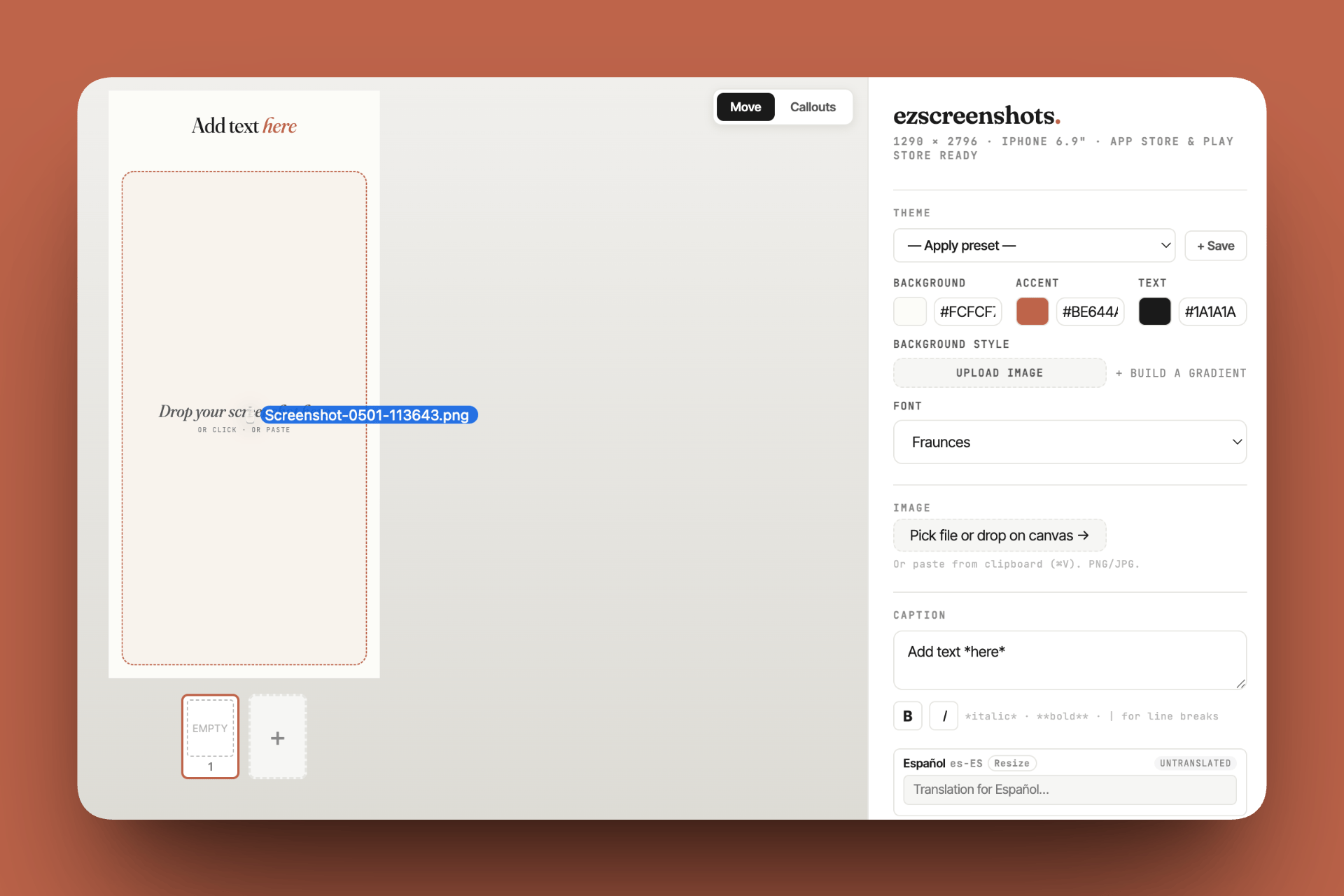
- First screenshot quality. App Store search results show your icon and the beginning of your first screenshot. A screenshot with a clear, specific benefit caption ("Log a set in 3 taps") gets tapped on at a higher rate than a screenshot with your app's UI and no text. Higher tap-through rate feeds the ranking algorithm directly. Use ezscreenshots to produce a first screenshot with a benefit-focused caption — it takes under 15 minutes and it's the single highest-leverage change you can make to a listing.
- Metadata localization. Translating your app name, subtitle, and keyword field into German, French, Japanese, and Spanish opens four additional storefronts with minimal effort. These markets have less competition per keyword than English, which means your app can rank faster. See the guide on localizing App Store screenshots for the full approach.
The channel most developers skip: personal networks
The Uber tactic — awkward and low-conversion as it is — gets at something real: personal networks and physical presence convert at higher rates than anonymous internet channels. Your friends, family, colleagues, and professional connections are warm leads who will give your app a genuine try if you ask directly.
The ask matters. "Check out my new app" gets ignored. "I built X to solve Y problem, and I'd genuinely appreciate you trying it and telling me what's confusing" gets a response. People want to help someone they know — give them a specific action and a way to provide feedback that makes them feel useful.
The launch goal from personal networks isn't volume — it's the first 10–30 reviews, which are disproportionately important for App Store ranking. See the guide on getting your first 100 downloads for how to sequence this.
What doesn't work (and why people keep trying it)
- Spamming app promotion subreddits. r/AppStore, r/androidapps, and similar subs are full of posts from developers promoting apps to other developers. Real users aren't there. The downloads from these posts are mostly from other devs who download once and never open it again. The sessions don't register as real engagement.
- Buying reviews or installs. Google and Apple detect fake engagement and it actively hurts your ranking. The short-term boost is followed by a sustained penalty.
- "Viral" naming schemes. Naming your app after a trending topic to capture search traffic is a tactic that was documented as far back as 2014 on r/androiddev. It violates app store policies, risks trademark claims, and results in low-quality installs with no retention — which tanks the ranking signals that matter for long-term growth.
The honest answer about marketing as a solo developer
One commenter in the Uber thread put it plainly: "Most devs don't understand marketing. It's a profession, not just running some ads." The zero-budget channels above are real — developers use them to build to thousands of downloads without paid spend. But they require sustained effort over weeks and months, not a single launch day post.
The developers who succeed at zero-budget marketing treat it as a parallel workstream to development: building in public during development, warming up communities before launch, coordinating their launch posts, and iterating on their listing based on what converts. The Uber QR code is an extreme example of the right instinct — find where your users actually are and get in front of them — applied to the wrong context. The right context is wherever your target users already gather online.
Make your listing convert the traffic you drive
Every zero-budget marketing channel sends people to your App Store listing. A weak first screenshot leaks that traffic. Drop in your Simulator screenshot, add a benefit-focused caption, export at the right dimensions. Free, no account needed.
Try ezscreenshots →Summary
- Reddit is the highest-ROI zero-budget channel — but requires weeks of community participation before posting about your app
- Building in public on X creates a warm launch audience whose reviews and downloads seed the App Store algorithm
- TikTok micro-influencers (5k–50k followers in your niche) have higher conversion rates than mega-influencers and are reachable without a budget
- Product Hunt works only if you've prepared — coordinate your launch with existing audience, aim for Tuesday–Thursday
- Launch directories are low-effort, high-permanence: a few hours of submissions creates lasting SEO and discovery footprints
- ASO is passive marketing: first screenshot quality drives tap-through rate, which directly feeds ranking
- Personal networks deliver the first reviews that are disproportionately important for new apps
- What doesn't work: app promotion subreddits (developer audience, not user audience), buying installs, trend-name exploits