The post that resonated
A developer posted on r/iOSProgramming describing their App Store journey: app 1 made $10, then another made $20, then a third hit $50 — and suddenly the portfolio was generating a steady monthly flow that funded the next projects. The snowball effect, as they called it. The thread hit 195 upvotes and 50 comments, which for a technical subreddit is unusually high signal — it clearly hit a nerve.
But the comments were mixed. "I have 15 apps and haven't recently seen a compounding effect yet." "Sounds good, doesn't work." "Not sure about this when thousands of teenagers are pouring their vibe-coded apps into the store." The truth is somewhere in the middle, and it's more nuanced than either the optimistic original post or the skeptical replies.
What actually compounds (and what doesn't)
What does compound: your skills
Every app teaches you something the next app benefits from. Xcode navigation, App Store Connect mechanics, screenshot production, App Review patterns, monetization setups — these get faster with each iteration. A developer who's shipped 10 apps can go from idea to submission in a fraction of the time it took for app 1. That velocity compounds regardless of whether the revenue does.
One commenter put it well: "Getting more efficient at making them and navigating App review better is a good feeling." That efficiency is real and it's valuable even if the revenue curve is flat.
What does compound: organic search presence
Each published app creates a permanent presence in App Store search for the keywords it targets. A portfolio of 10 apps, even if each earns modestly, covers more keyword surface area than a single app ever could. Some of those apps will capture searches you didn't originally target as Apple's algorithm learns what your app is actually useful for.
This is the version of the snowball effect that's most reliably true — not necessarily revenue per app going up, but total discovery surface expanding with each ship.
What does compound: cross-promotion
Once you have multiple apps, you can cross-promote within them. A subtle "from the maker of X" mention in an app description, a "you might also like" section in an About screen, or a push notification about a new release to existing users — these create distribution that has no marginal cost. Your existing user base becomes a launch channel for new apps.
This is genuinely powerful. A developer with 3 apps and 10,000 total users has a built-in audience for app 4 that a first-time developer doesn't.
What doesn't automatically compound: revenue per app
The original post frames it as each app gradually earning more over time. Sometimes that's true — organic search rank can improve as an app ages and accumulates ratings — but it's not guaranteed. Apps that solve a real problem with good execution can grow organically. Apps that solve a marginal problem or have mediocre screenshots and ASO tend to plateau quickly regardless of how long they've been live.
One commenter with 15 apps noted they hadn't seen a compounding revenue effect. That's not unusual. Volume alone doesn't create compounding — quality of execution on each app does.
What can reverse: revenue concentration risk
The comment that deserves more attention in these conversations: "I laid back for 2 years, had a nice revenue so I didn't bother creating anything new, but recently the revenue went downhill and I had to start over." This is the other side of portfolio concentration. If 80% of your revenue comes from 1-2 apps and one of them gets disrupted — algorithm change, better-funded competitor enters, Apple changes a policy — your whole portfolio income drops.
The antidote: keep shipping. Don't treat a comfortable revenue run rate as permission to stop. The portfolio needs active management, not just passive collection.
The realistic timeline
For developers who ship consistently and execute well on each app (real problem, polished UI, good screenshots and ASO), a rough timeline from the community data:
| Stage | What it typically looks like |
|---|---|
| Apps 1–3 | Single-digit to low double-digit monthly revenue per app. Primarily learning — App Review, monetization, analytics, user feedback loops. |
| Apps 4–6 | One or two apps start generating enough to cover tooling and dev account costs. Shipping gets faster. You have opinions about what works. |
| Apps 7–10 | If you've been solving real problems and maintaining your portfolio: portfolio revenue starts covering a meaningful side income. Cross-promotion begins to work. |
| Apps 10+ | The developers who reach this point with good execution report the snowball effect. Not because of app count alone — because they've shipped 10 rounds of feedback and iteration. |
The caveat: this assumes each app is a genuine attempt at solving a problem for a real audience, not AI-generated filler or a minimal implementation of an existing app. Volume of mediocre apps doesn't compound. Volume of useful apps does.
What separates the apps that grow from the ones that plateau
Looking across the thread and the broader indie developer community, the apps that continue growing organically after launch tend to share a few traits:
They solve a specific problem, not a general one
"Fitness app" competes with Nike Training Club and Peloton. "Silent interval timer for Pomodoro sessions" is a specific problem with a specific audience and far less competition. Specificity wins in a crowded store, especially for solo developers who can't outspend incumbents on paid UA.
Their first screenshot makes the value proposition obvious in two seconds
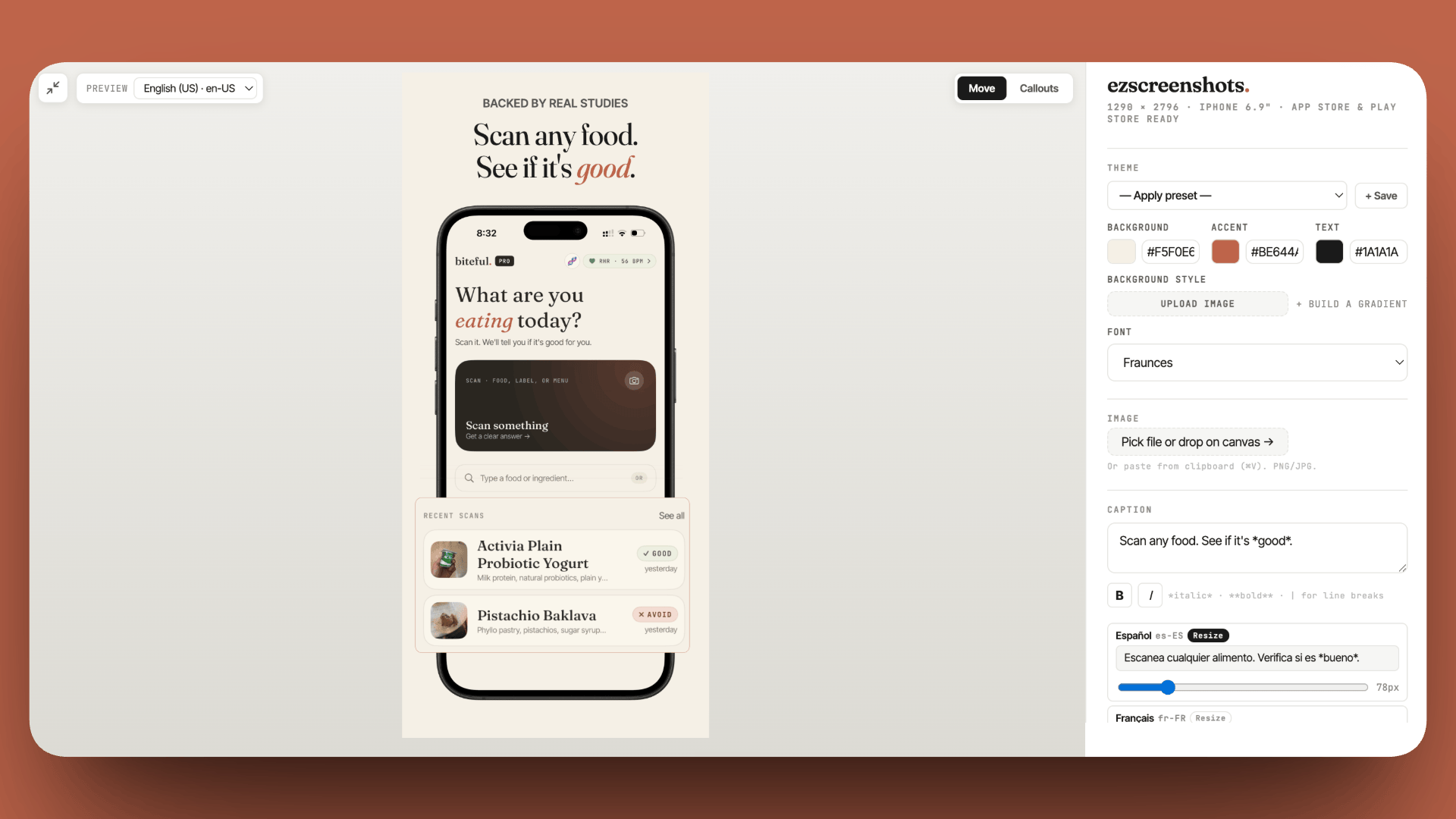
App Store search result pages show your icon and the beginning of your first screenshot. Users make the tap decision in under two seconds. Apps whose first screenshot clearly communicates a specific benefit ("Log a set in 3 taps") get tapped on more than apps with beautiful but vague screenshots. Higher tap-through → higher rank → more organic installs. This loop, compounding over months, is what drives the revenue growth pattern the original post describes.
A tool like ezscreenshots exists precisely to make this easier — drop in your real app screenshot, add a crisp benefit-focused caption, export at the right dimensions. The mechanics of producing a polished first screenshot shouldn't be the bottleneck.
They maintain a reasonable rating
A 4.5+ rating with consistent recent reviews signals to Apple's algorithm that users are happy — which feeds into ranking. Apps that ship and abandon (no update response to OS changes, unresponsive to review feedback) tend to see their rating drift down and their ranking follow. Even one maintenance update per quarter, addressing the top user complaint, keeps an app healthy.
They have localized metadata at minimum
Localizing your app name, subtitle, and keywords into the major non-English storefronts (German, French, Japanese, Spanish) opens up significant keyword surface with minimal effort. You don't necessarily need localized screenshots for every market on day one — metadata localization alone meaningfully expands discovery. For a portfolio developer shipping multiple apps, this is one of the highest-ROI maintenance tasks.
The part nobody talks about: maintenance overhead
10 apps sounds great until you realize each one needs:
- Compatibility updates as new iOS versions ship (Apple requires apps to support recent SDKs within a year)
- Review responses — unanswered negative reviews drag ratings down
- Screenshot refreshes when your UI changes significantly
- Metadata maintenance as keyword landscapes shift
At 10 apps, this maintenance load is manageable — maybe 4-6 hours per month in aggregate. At 20+ apps, it becomes a real time commitment. Portfolio developers who scale past 20 apps typically either automate (Fastlane for build and submission, standardized screenshot templates) or accept that older apps will slowly decay.
The implication: don't ship apps you're not willing to maintain. A 1-star-rated abandoned app in your portfolio doesn't just earn nothing — it can drag down your developer reputation in App Store Connect and affect review processing times for new apps.
Practical advice for developers at the start
If you're on apps 1–3 and the revenue feels discouraging:
- Ship real solutions to specific problems. "What do I personally wish existed?" is a better starting point than "what app could I make quickly?"
- Invest in the first screenshot for each app. It's the single highest-leverage action after launch. A better first screenshot → better tap-through → better rank → more organic installs.
- Localize metadata early — app name, subtitle, keywords in German, French, Japanese at minimum. It takes an afternoon and opens new storefronts permanently.
- Respond to every review for the first 6 months. It signals to users and Apple that the app is actively maintained.
- Don't abandon apps too early. Apps often see a second organic traffic spike 6–12 months post-launch as App Store ranking catches up with keyword signals.
- Keep shipping. The learning from app 3 is worth more than the revenue from app 1 at this stage.
Make every app's first screenshot count
The first screenshot is the highest-leverage element in your App Store listing. Drop in your real app screenshot, add a clear benefit caption, export at the right dimensions. Free, no account needed.
Try ezscreenshots →Summary
- What does compound: your skills, App Store search presence, and cross-promotion reach across your portfolio
- What doesn't automatically compound: revenue per app — that requires real problems, good execution, and active maintenance
- Revenue concentration risk is real: if 80% of income comes from 1-2 apps, keep shipping to diversify
- Maintenance overhead grows with portfolio size — budget 4–6 hours/month per 10 apps at minimum
- First screenshot quality matters more than app count — it drives the tap-through → rank → installs loop that compounds
- Metadata localization is the highest-ROI maintenance task for expanding organic reach