The 90-day pattern nobody talks about
The founder's opening line is worth repeating: "Not a 'woke up to 5,000 signups' thing. More like steady accumulation from a few channels that compound if you show up daily."
Most growth advice online is written about viral moments. This playbook is about the alternative — what actually works for the majority of indie products that don't go viral. The thread got 112 upvotes and 329 comments because it described something recognizable: grinding five channels, none spectacular on their own, all compounding over three months.
The pattern underlying all five channels: stay close to the problem and the human, not the channel. One commenter summarized it precisely: "SEO captures buying intent, Reddit finds explicit pain, LinkedIn tracks relationship signals, personal onboarding removes confusion, partnerships borrow trust. Most teams optimize tactics instead of intent and wonder why nothing compounds."
Channel 1: SEO that targets problems, not keywords
The founder's SEO output wasn't volume-based. It was a small set of pages matched tightly to buying intent. The five content types that produced results:
- Problem-first posts: "How to do X without Y" — the job-to-be-done your product solves, framed as a problem the reader has right now
- Comparison pages: "Tool A vs Tool B for [use case]" — people searching this are close to buying; high commercial intent
- Alternatives pages: "Best alternatives to X" — also high intent; readers are already evaluating and want options
- Integration/workflow pages: "How to [workflow] with [platform]" — targets users of adjacent tools who have the problem you solve
- Refresh, don't spam: updating 5 posts that already rank beat publishing 50 new ones
The principle behind all five: people don't search for product features, they search for problems. "App Store screenshot tool" is a feature search. "How to make App Store screenshots without Figma" is a problem search. The second query has higher intent and lower competition.
For App Store context: the same logic applies to product page metadata. A subtitle like "screenshot maker" describes the tool. "Ship in minutes, no designer needed" describes the problem solved. Outcome-first copy converts at higher rates across every channel — this principle appears repeatedly across indie developer threads, and it's exactly the framing that ezscreenshots is built around for screenshot captions.
Channel 2: Reddit — community presence, not distribution
Reddit was the founder's highest-quality acquisition channel, but only because they used it correctly. The rule: reply only where there's something genuinely useful to add.
The Reddit playbook that worked:
- Find threads where people are already asking for help — pain is explicit, not hypothetical
- Reply with specifics: steps, examples, what you tried, what failed — the kind of answer you'd want to receive
- If the product fits, mention it once at the end as an option, not the point of the reply
- Don't drop links unless someone asks — Reddit's filters and downvotes are real
Multiple commenters echoed this from their own experience. One developer: "All of my paid users have come through Reddit. The key is to not be annoying and actually offer real value. You'll still get people downvoting you for it though." Another: "Being genuine on Reddit is a superpower only because most people aren't."
The reason Reddit produces high-quality customers is the context: readers arrive already mid-problem. When you show up with a useful answer in that moment, you've pre-qualified the relationship before the product conversation starts. The same search pattern — find people mid-pain, not people who might eventually have the problem — is covered in detail in our guide to finding your first users.
Channel 3: LinkedIn — relationships, not broadcast posts
The founder's LinkedIn results came from a daily relationship loop, not posting volume. The routine that worked:
- Targeted engagement with a shortlist of accounts, not the main feed
- Thoughtful comments on posts from potential customers
- DMs only after a signal — a reply, a like, repeated interaction — not cold outreach
- Follow-ups tracked like a pipeline: most conversions came after the 2nd or 3rd touch
"Posting helped, but the daily relationship-building loop helped more." This is consistent with how B2B and SaaS acquisition generally works at the early stage: content establishes presence, but individual conversations close customers. LinkedIn's DM channel, like X/Twitter DMs, has higher response rates than public posts because it's still primarily person-to-person.
Channel 4: Personal onboarding for high-fit signups
The founder personally reached out to every signup that looked like a real fit — not a form email, a personal message: "Hey, what are you trying to do with it? Want a quick walkthrough?"
Three outcomes from that one intervention:
- Reduced churn — people churn when they're confused; a 10-minute walkthrough removes the confusion before it becomes a cancellation
- Copy and positioning insight — users describe their problem in their own language, which becomes your headline and ad copy
- Faster trial-to-paid conversion — people who've had a real conversation with the founder convert faster than people who've only interacted with the product
One commenter: "Confusion is the real churn driver early. Personal onboarding works because you're removing the thing that causes people to leave, not adding features to make them stay." The implication for App Store apps: your onboarding flow is doing the job that personal walkthroughs do for SaaS products. If your first-session experience doesn't address the user's core confusion within 2 minutes, a meaningful portion of installs won't come back.
Channel 5: Small creator partnerships over "big launch energy"
The founder partnered with a small number of creators who had the right audience — some paid, some free access in exchange for two posts. The framing: trust borrowing. A creator with 5,000 engaged followers in your exact niche converts better than a generic launch post to a broader audience of 50,000.
This is consistent with the broader pattern in micro-influencer marketing: specificity of audience matters more than scale. A tech YouTuber with 8,000 subscribers whose audience is iOS developers is more valuable than a generalist tech account with 200,000 followers. The conversion rate on niche trust is meaningfully higher.
Why this compounds (and why volume-first approaches don't)
The comment thread's most useful observation: "Most early SaaS stalls because founders want leverage before they have signal. SEO works when you already understand the buyer. Reddit works when you are actually present. Personal onboarding works because confusion is the real churn driver early."
The five channels compound because each one produces signal that makes the next one better. Reddit conversations tell you what language buyers use, which improves your SEO keyword choices. Personal onboarding conversations reveal the core confusion, which improves your onboarding flow. Creator partnerships introduce you to people who then engage on LinkedIn and Reddit, which builds presence in those channels.
The volume-first alternative — publish 50 SEO posts, post on LinkedIn 3x/day, cold-DM 200 people — doesn't compound because it's optimizing for output, not for signal. You end up with a lot of content that doesn't rank and a lot of DMs that don't convert, because the content and copy aren't grounded in what buyers actually say when they're mid-problem.
Applying this to App Store distribution
The five channels above are SaaS-focused, but the underlying principles map directly to App Store apps:
- Intent-first content: blog posts, Reddit answers, and App Store metadata all convert better when written for the problem, not the feature
- Reddit community presence: same playbook — find threads where your users are mid-problem, add genuine value, mention your app once if it fits
- Onboarding as retention lever: the App Store equivalent of personal onboarding is a well-designed first-session flow — if users don't reach the "aha moment" in session 1, they don't come back
- Small creator partnerships: niche app YouTubers and TikTok creators with developer-adjacent audiences often have more impact per dollar than broad advertising
The listing itself is the foundation. If your App Store screenshots don't communicate the outcome clearly — what changes for the user in the first session — then SEO, Reddit, and creator partnerships all drive traffic that doesn't convert. The caption on your first screenshot is the equivalent of the founder's SEO headline: outcome-first, problem-aware, written for the person who is frustrated right now. ezscreenshots makes it straightforward to get that right — drop in your Simulator screenshot, add a benefit-focused caption, export at the correct dimensions for your device targets.
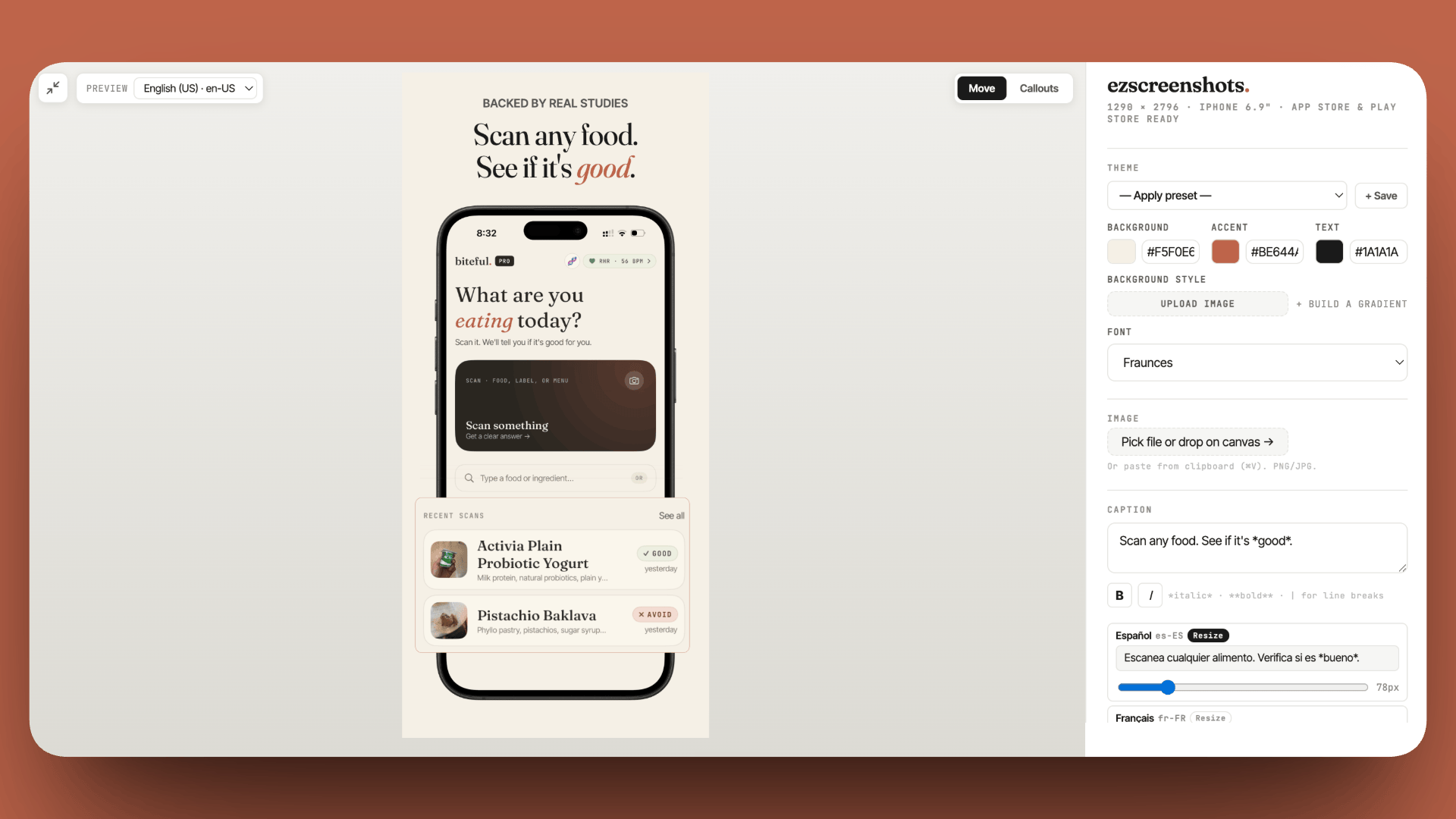
Make your listing match your acquisition effort
SEO, Reddit, creator partnerships — all of it drives traffic to your listing. If the first screenshot doesn't communicate the outcome clearly, the traffic doesn't convert. Drop in your Simulator screenshot, add a benefit-focused caption, export at the right dimensions. Free, no account needed.
Try ezscreenshots →Summary
- 60+ paid customers in 90 days came from five boring channels done consistently — not one viral moment
- SEO: problem-first posts, comparison pages, alternatives pages, integration workflow pages — update existing posts that rank before publishing new ones
- Reddit: reply where you can add genuine value, mention your product once at the end as an option, don't lead with links
- LinkedIn: daily relationship loop (targeted engagement, thoughtful comments, DMs after signal) beats posting volume
- Personal onboarding: reach out to high-fit signups personally — reduces churn, extracts positioning insight, accelerates trial-to-paid
- Creator partnerships: small niche creators with the right audience beat large generalist accounts; trust borrowing outperforms broadcast reach
- The compounding principle: each channel produces signal that improves the next one — volume-first approaches don't compound because they optimize for output, not signal
- App Store translation: the same intent-first principle applies to metadata, screenshot captions, and onboarding flows — write for the person who is frustrated right now