The post that resonated with everyone
The developer's description is painfully familiar: three products, a year of solo building, all technically working, all shut down for the same reason — no users. Not because of laziness. Not because of a bad product. Because nobody showed up.
The follow-the-playbook detail is the part that makes this worth examining: they picked real problems, built MVPs, launched on Product Hunt, Reddit, and Twitter, asked for feedback, tried to start conversations. All the things you're supposed to do. Still: crickets.
The comment thread's top-voted response, at 83 upvotes, cut to the core: "Twitter, Reddit, and Product Hunt? That is not marketing. That is just a way to avoid doing the work."
What the 85 comments agreed on
Despite coming from different angles — founders, marketers, developers who'd been through similar failures — the responses converged on three root causes. Not three separate diagnoses: three facets of the same underlying mistake.
1. Distribution was treated as a launch event, not a channel
Product Hunt, Reddit, and Twitter posts are launch announcements, not distribution channels. A launch announcement tells the people already paying attention that something new exists. A distribution channel is a repeatable mechanism for putting your product in front of people who have the problem you solve, week after week.
The highest-upvoted comment made this explicit: "You are not alone. This happens with every product, no matter what you're selling. Started a YouTube channel? Now you have to find viewers. Released a book? Now you have to find readers. Whatever you do, you still have to track down the people who will actually use what you made — and that's the part no one talks about."
Launch announcements create a spike. Distribution compounds. Three dead products with the same pattern suggests the launch spike ran out and the distribution channel never existed.
2. No audience means no amplification
The developer mentioned deleting their "build in public" posts after they felt like "yelling into an empty room." The comment thread's response to this was direct: building in public only compounds if you already have an audience. Posting progress updates to zero followers produces zero amplification — the content exists but has no distribution mechanism of its own.
One commenter framed it precisely: "Building in public is only valid if you have an audience who cares. Without that, you are still broadcasting to silence." The implication isn't "don't build in public" — it's that building in public is the wrong first step. The right first step is finding the people who have the problem, talking to them directly, and only then broadcasting progress to the community you've built around that problem.
This is also why the "find people mid-pain, not people who might eventually have the problem" principle matters so much — covered in our post on finding first users. A developer posting on Reddit three hours ago about a specific problem they're stuck on will respond to outreach. Someone who vaguely matches your target demographic won't.
3. "Picked a real problem" without validation is a guess
One of the most pointed comments in the thread: "How do you know it's a real problem? This is one of the parts you need to figure out. If you can't find people to talk to, you don't have a distribution channel. You're basically doing build-and-they-will-come."
The trap is that a problem can feel real — you've identified a pain point, it makes logical sense — without being something that a specific group of people urgently needs solved. The test isn't "does this problem exist?" It's "can I find ten people who are frustrated enough by this right now that they'd switch their workflow to fix it?" If the answer is no, the market is either too small or the pain isn't acute enough to drive adoption.
One founder in the thread who'd had a successful exit described the alternative: design partners. Real customers who say, before you build it, "when you build this I will buy it" — and are motivated enough to use it as you build and meet with you weekly to give feedback. "For people to use a startup's product, their pain has to be intense enough that they will adapt their workflow to use something imperfect. If you can't find anyone willing to do that, you haven't found the right problem yet."
The meta-pattern: building as avoidance
The top comment's sharp observation deserves more attention: "Twitter, Reddit, and Product Hunt is just a way to avoid doing the work." The "work" being avoided is the hard, uncomfortable, non-scalable work of finding real customers and convincing them to use your product.
Building is safe. You're in control, you can measure progress, you can see something taking shape. Finding customers is risky, slow, and full of rejection. So most solo developers optimize for building because it feels productive, and treat the launch post as a proxy for "putting it out there." The launch post has zero conversion rate if it reaches zero people with the problem.
"Selling is the hardest part and it's the one thing you're not doing. This is the #1 reason most indie devs fail." — thread comment with 1 upvote but the most direct summary of the whole discussion.
The fix isn't a growth hack. It's a reordering of priorities: find the customer before you build for them. Talk to people who have the problem. Get a commitment — however informal — before shipping. Then treat distribution as an ongoing job, not a one-time launch event.
What to do with a product that already shipped to silence
The developer's three products were shut down. But the pattern applies equally to any product that shipped and got no traction — including App Store apps that went live and got zero organic downloads in the first week.
The recovery sequence that commenters consistently suggested:
- Find the real audience first. Go to the communities where the people with this problem live. Reddit subreddits, Discord servers, niche forums. Don't pitch — observe. Read threads where people describe the problem. Find the language they use.
- Talk to five people who have the problem. Not to pitch, to understand. "What's your current workaround?" "What's the most frustrating part?" "What have you tried that didn't work?" These conversations are more valuable than any analytics.
- Rewrite the positioning based on what you hear. The product's description, landing page headline, App Store subtitle — all of it should use the language real users use when they describe the problem, not the language you used when you built the solution.
- Find one community that has the problem and become genuinely present there. Not promotional. Helpful. The kind of person people want to DM when they have that specific problem.
One important nuance from the thread: the developer may have been too quick to shut things down. "Just don't kill your apps completely — even if no one is using them, do marketing as much as possible. Survival is about consistency." Three months of building followed by a launch post is not a full test of whether a product has market potential — it's a test of whether a launch post drives adoption. Those are different questions.
The App Store version of this pattern
The "three dead products" story maps directly onto App Store launches that see a small spike on launch day followed by nothing. The pattern is identical: a product page that's the equivalent of a Reddit launch post — describing the tool, not the problem it solves — followed by no ongoing distribution mechanism.
The App Store has one channel that doesn't require an existing audience: organic search. Someone searching "habit tracker for ADHD" is mid-pain, high-intent, actively looking for a solution. Your listing either answers their search or it doesn't.
Whether it answers their search depends on three things: keywords in your subtitle and description (which determines whether you appear), the first screenshot caption (which determines whether they tap through), and your onboarding flow (which determines whether they stay). All three are messaging problems, not product problems — exactly the same diagnosis the thread gave the three dead SaaS products.
The first screenshot caption is the highest-leverage element. "Habit Tracker" tells a searcher what the category is. "Build a habit that sticks in 21 days" tells them what changes for them. The second converts better because it answers the question the searcher is actually asking. ezscreenshots is built around exactly this — drop in your Simulator screenshot, add an outcome-focused caption, export at the right dimensions for every device. Same principle, different channel: write for the person who is frustrated right now, not the person who might eventually be interested.
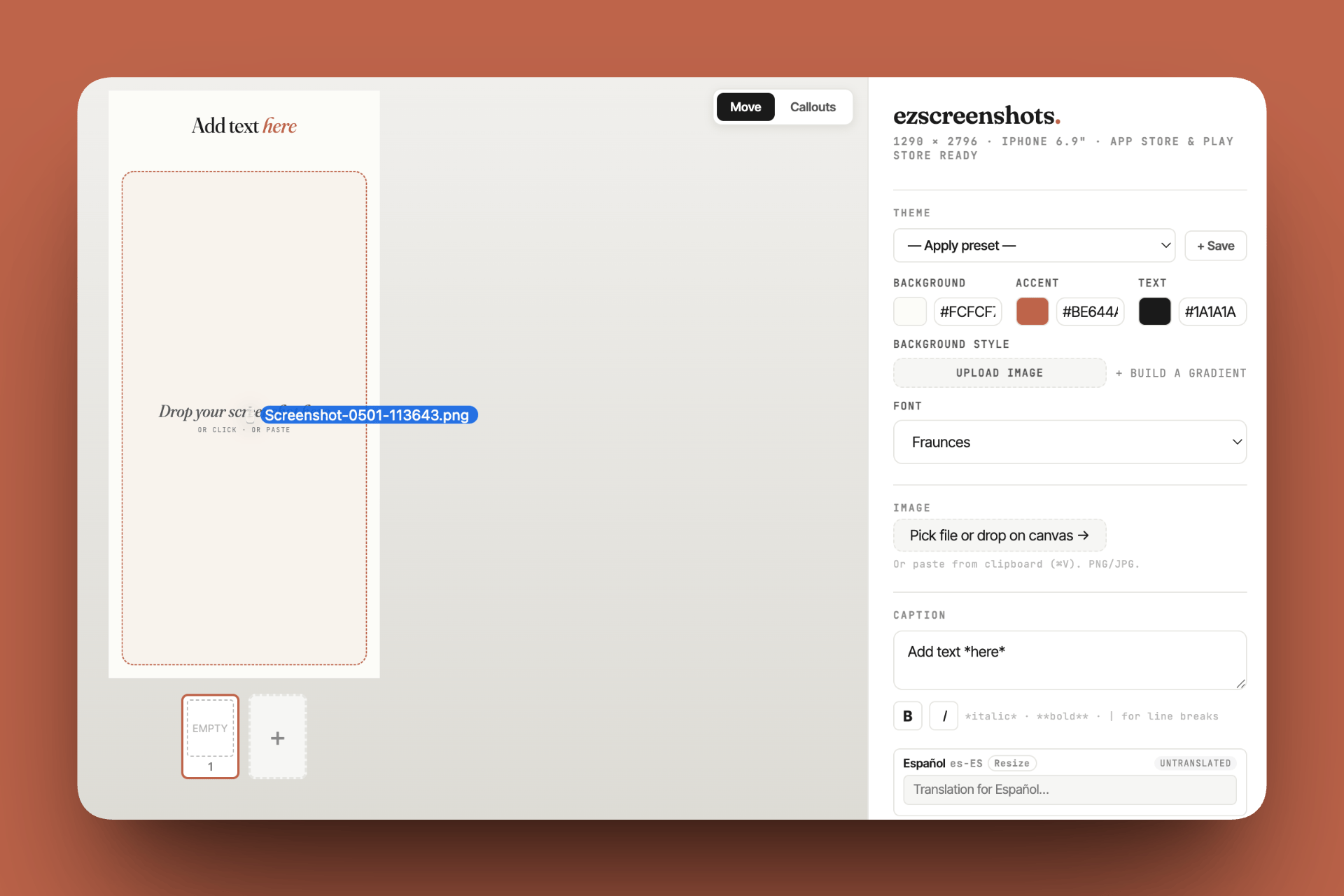
Make your listing answer the search, not describe the tool
The first screenshot caption is where organic search converts — or doesn't. Change "Habit Tracker" to "Build a habit that sticks in 21 days." Drop in your Simulator screenshot, add the outcome-focused caption, export at the right dimensions. Free, no account needed.
Try ezscreenshots →Summary
- Three working products, zero users — the consistent diagnosis from 85 comments was distribution, not product
- Product Hunt + Reddit + Twitter is not distribution — it's a launch announcement to the people already paying attention; a distribution channel is a repeatable mechanism for reaching people who have the problem
- Building in public only amplifies if you have an audience — without one, you're broadcasting to silence; build the audience before the broadcast
- "Picked a real problem" without validation is a guess — the real test is finding ten people frustrated enough to adapt their workflow to use something imperfect right now
- Building as avoidance — launching a product is safer than finding customers; most failures come from optimizing for the former while skipping the latter
- Recovery from a silent launch: find the real audience first, talk to five people with the problem, rewrite positioning in their language, become genuinely present in one community
- App Store translation: organic search is the App Store's built-in distribution channel — your listing converts when it answers the searcher's actual question, not when it describes the tool's category